菜脯简介
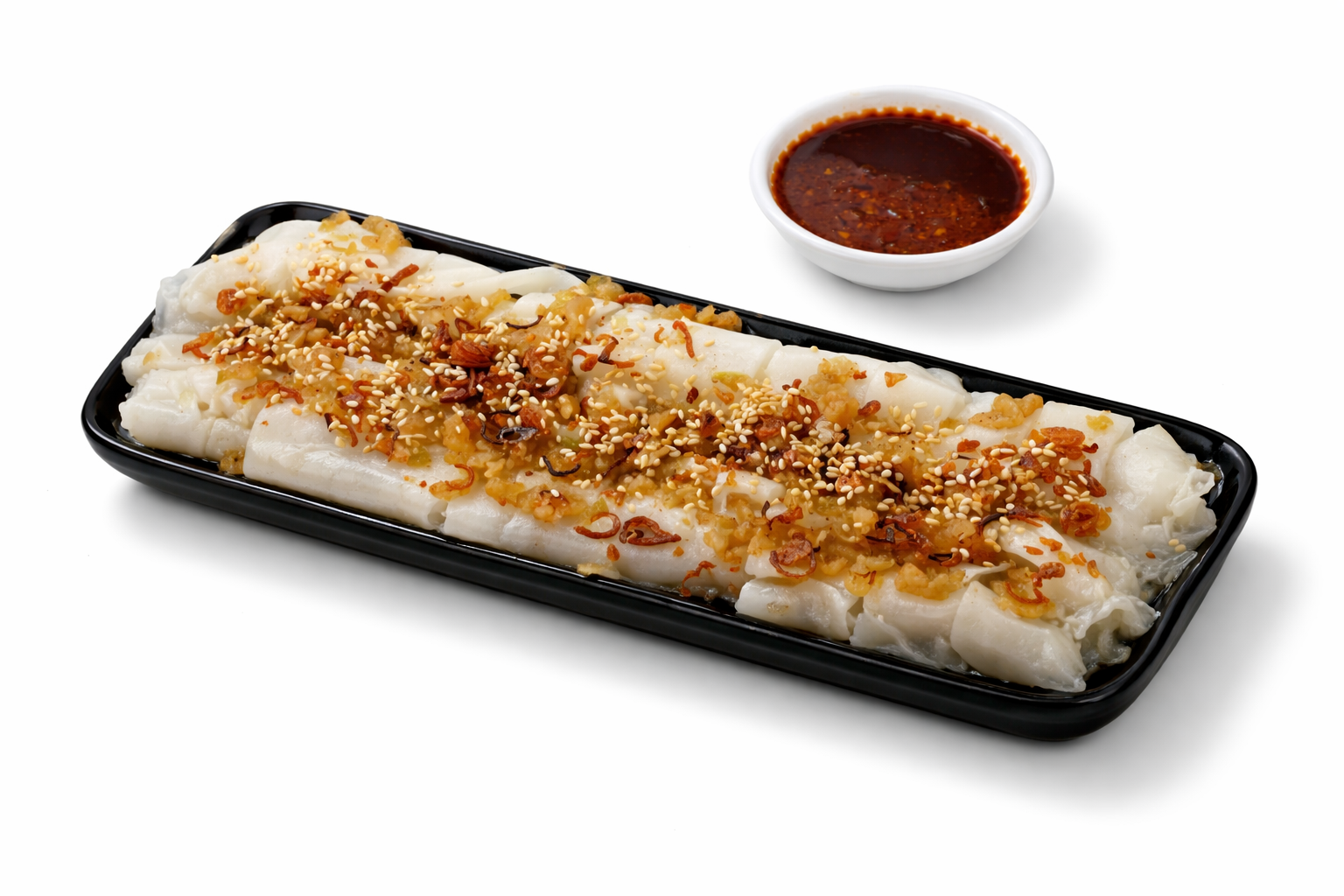
肥嫂酿豆腐的主角之一“菜脯猪肠粉”. 是延续了肥嫂食谱中的其中一道福建传统酱料。以前肥嫂都是煮来收在罐子里。煎鸡蛋时加一些菜脯,肥嫂自家的菜脯蛋。出去外边买些猪肠粉回来,不放甜辣酱,回家自己加菜脯。一次可以吃上五、六条!还有水粿,会特别交代老板不要菜脯,买回去后,肥嫂会把水粿拿来在锅上放点油来煎,煎至有点焦脆时,再放菜脯下去翻两翻马上起锅!又是一道肥嫂自家的煎水粿!还有,肥嫂会把猪肠粉剪片拿来炒,加鸡蛋,黑甜酱油,再捞些菜脯然后起锅,一道香喷喷的炒菜脯猪肠粉的“菜头粿”来了!除了这些,自家菜脯还可以拿来配白粥,炸馒头吃!
如今,随着时代的变迁,饮食文化有了很大的改变。有古早味的食物,都各说不一。但是,还是会引人好奇!所以,为了在饮食业生存下去,我时不时都会从记忆里寻找以前老屋厨房里的味道。而,就想到了以前常去外头打包猪肠粉回去配菜脯吃的片段。然后,再从零零碎碎的回忆里,凑出当时肥嫂在准备烹煮菜脯时,那些摆在旧木桌上的材料。在尝试了无数遍的食材比率调味之后。终于找回了当时的味道!于是乎,肥嫂酿豆腐的招牌上,就多了个老福建菜脯猪肠粉的菜单出来了。是不是古早味,很争议。毕竟,你妈没我妈煮得好吃的心理因素,吃了只有自己知道!能说服食客的,往往不是食物本身是否够古早,而是餐馆够不够久!品牌够不够好。厨师够不够老!
至于肥嫂菜脯猪肠粉古早不古早,还需要你的留言来凑凑热闹一下了😉
One of the Stars of Fatty Aunt Yong Tau Foo – Our Traditional Hokkien Preserved Radish Chee Cheong Fun 😊
One of the signature dishes at Fatty Aunt Yong Tau Foo is our Traditional Hokkien Preserved Radish (Cai Poh) Chee Cheong Fun. It all began with a treasured Hokkien family recipe that has been part of Fatty Aunt’s kitchen for decades.
Back then, Fatty Aunt would cook a large batch of homemade cai poh and store it in glass jars. It became an essential ingredient in many of our favourite home-cooked dishes.
A sprinkle of cai poh turned an ordinary fried egg into Fatty Aunt’s famous homemade cai poh omelette.
Whenever we bought plain Chee Cheong Fun from outside, we’d skip the sweet chilli sauce altogether. We’d bring it home and generously top it with our homemade cai poh instead. Five or six rolls in one sitting? That was nothing unusual!
Even chwee kueh had to be done Fatty Aunt’s way. We’d ask the hawker not to add preserved radish because we’d prepare it ourselves at home. Fatty Aunt would lightly pan-fry the steamed rice cakes until the edges turned golden and slightly crispy, then quickly toss them with her homemade cai poh. Simple, fragrant, and unforgettable.
Sometimes she’d cut Chee Cheong Fun into bite-sized pieces and stir-fry it with eggs, dark sweet soy sauce, and a generous handful of homemade cai poh. Out came a wonderfully fragrant dish that reminded everyone of homemade fried carrot cake—but with Chee Cheong Fun instead.
And that wasn’t all. Our homemade cai poh was just as delicious served with plain porridge or crispy fried mantou.
As times changed, so did food culture. Everyone has their own idea of what “traditional” really means. Yet those old flavours continue to spark curiosity and bring back precious memories.
To keep Fatty Aunt Yong Tau Foo alive while staying true to our roots, I often find myself searching my childhood memories for the flavours that once filled our old family kitchen.
Then one day, I remembered those simple moments of buying plain Chee Cheong Fun and bringing it home to enjoy with Fatty Aunt’s homemade cai poh.
Piece by piece, those memories came back.
I remembered the ingredients carefully laid out on the old wooden table and how Fatty Aunt patiently prepared every batch of cai poh. After countless attempts to perfect the seasoning and ingredient ratios, I finally recreated the flavour I had been searching for.
That was the birth of Fatty Aunt’s Traditional Hokkien Preserved Radish Chee Cheong Fun, which proudly became one of our signature dishes.
Is it truly an authentic taste of the good old days?
Well… that’s always open to debate.
After all, everyone believes their own mother’s cooking is the best. Whether a dish tastes “traditional” is often as much about memories as it is about flavour.
Sometimes what wins people’s hearts isn’t simply how old-school the food is—it is the story behind it, the years a restaurant has stood, the trust a brand has earned, and the passion of the people who continue to cook it.
So…
Is Fatty Aunt’s Hokkien Preserved Radish Chee Cheong Fun truly a taste of the good old days?
We’ll leave that for you to decide.
Come and give it a try… and don’t forget to leave us a comment. We’d love to hear what you think! 😉